
Measuring a box sounds simple until you have to order packaging, calculate shipping costs, design a product label, or check whether something will fit through a doorway. The good news is that once you understand which side is length, which is width, and which is height, the process becomes quick, repeatable, and much less confusing.
TLDR: To measure a box correctly, place it in its normal upright position and measure the three dimensions: length, width, and height. Length is usually the longest side of the opening, width is the shorter side of the opening, and height is the vertical distance from bottom to top. Always measure the inside dimensions for fitting products and the outside dimensions for shipping, storage, or carrier requirements.
Why Box Measurements Matter
Box dimensions are used for much more than simply describing size. Couriers use them to calculate shipping rates, warehouses use them to plan storage space, manufacturers use them for packaging design, and shoppers use them to decide whether an item will fit. A small measurement mistake can lead to higher shipping charges, damaged products, wasted materials, or boxes that are simply the wrong size.
The most common source of confusion is the order of dimensions. Box measurements are usually written as:
Length × Width × Height
For example, a box listed as 12 × 8 × 6 inches has a length of 12 inches, a width of 8 inches, and a height of 6 inches. This standard order is widely used in packaging, shipping, retail, and manufacturing.
Step 1: Place the Box in the Correct Position
Before measuring, set the box on a flat surface in its natural upright position. If it has an opening, flaps, printed labels, or a lid, position it the way it would normally be packed, stored, or shipped. This helps you identify the top, bottom, and sides correctly.
For a standard rectangular shipping box, imagine looking down into the open box. The two measurements across the opening are the length and width. The distance from the bottom of the box to the top edge is the height.
Step 2: Identify the Length
The length is generally the longest side of the box’s opening. If you are looking at the box from above, it is the longer horizontal edge. In most rectangular boxes, this measurement is easy to spot because one side of the top opening is clearly longer than the other.
For example, if the top opening measures 20 inches one way and 14 inches the other way, the 20-inch side is the length.
However, not every box is dramatically rectangular. Some boxes are nearly square, and in those cases, the length may only be slightly longer than the width. If both top dimensions are equal, you can choose either one as the length, as long as you stay consistent when writing the dimensions.
Step 3: Identify the Width
The width is the shorter side of the box’s opening. It runs across the top of the box at a right angle to the length. If length goes left to right, width goes front to back, or vice versa depending on how the box is facing you.
Using the earlier example, if a box opening measures 20 inches by 14 inches, the 14-inch side is the width. Together, length and width describe the footprint of the box, meaning how much floor, shelf, or pallet space it takes up.
- Length: the longer side of the opening
- Width: the shorter side of the opening
- Height: the vertical measurement from bottom to top
Step 4: Measure the Height
The height is the distance from the base of the box to the top. It is the vertical measurement, not one of the sides across the opening. To measure it, place your tape measure at the bottom edge of the box and extend it straight upward to the top edge.
This is especially important for boxes with lids, tuck tops, flaps, or irregular closures. If the box will be shipped closed, measure the height when it is fully assembled and sealed. If the lid adds extra height, include it in the outside measurement.
Inside Dimensions vs. Outside Dimensions
One of the most important questions is whether you should measure the inside or outside of the box. The answer depends on what you are using the measurement for.
Inside dimensions measure the usable space inside the box. These are the dimensions you need when choosing a box for a product, gift, part, or stored item. If your item is 10 inches long, the inside length of the box must be slightly greater than 10 inches, especially if you plan to add bubble wrap, paper, foam, or dividers.
Outside dimensions measure the full external size of the box, including the thickness of the cardboard, lid, seams, and flaps. These are the dimensions usually needed for shipping quotes, storage planning, shelving, and carrier size limits.
As a simple rule:
- Use inside dimensions when deciding what fits in the box.
- Use outside dimensions when deciding where the box fits or how much it costs to ship.
How to Measure a Box Accurately
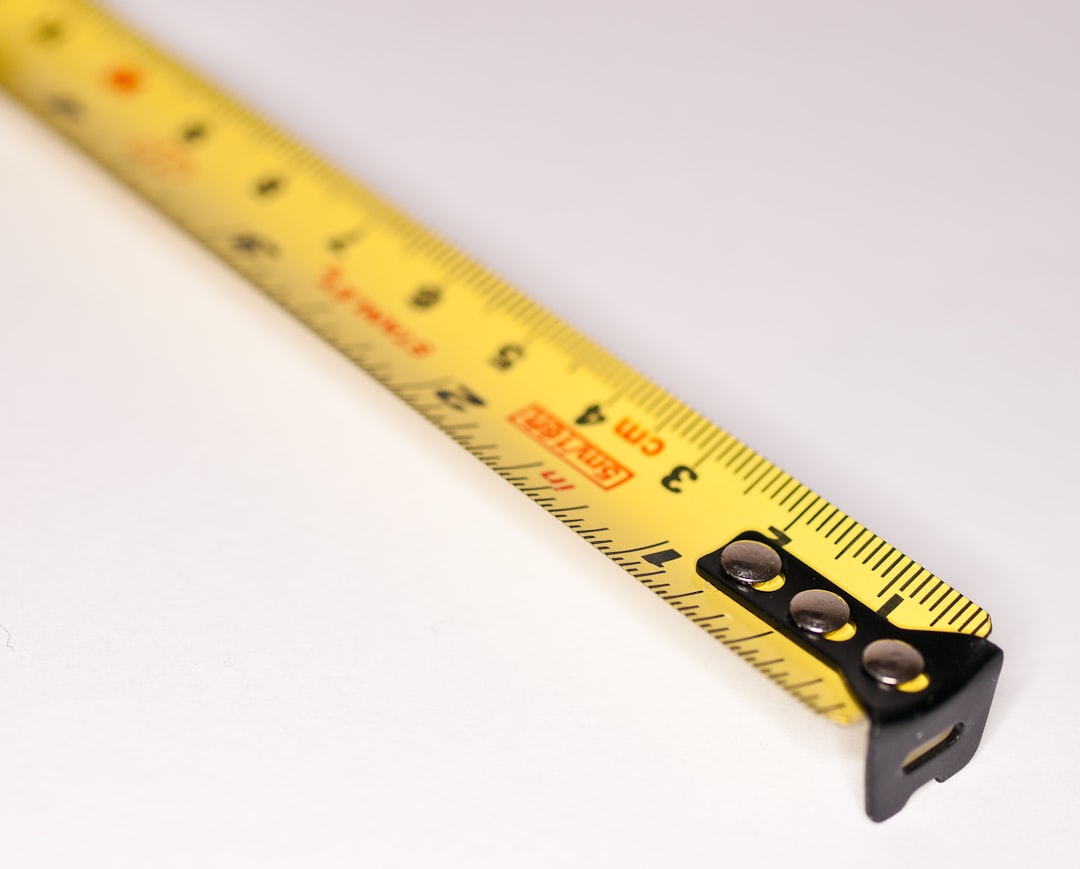
For the most accurate results, use a firm measuring tape, ruler, or yardstick. Flexible fabric tapes can stretch or bend, which may cause inaccurate readings. If you are measuring a large box, a metal tape measure usually works best.
Follow these steps:
- Place the box on a flat, level surface.
- Make sure the box is fully assembled.
- Measure the length across the longest side of the opening.
- Measure the width across the shorter side of the opening.
- Measure the height from the bottom to the top.
- Write the measurements in the order L × W × H.
If the box is slightly warped, bulging, or crushed, measure at the widest points, especially for shipping. Carriers often care about the maximum outside dimensions, not the neatest or smallest part of the box.
Common Mistakes to Avoid
Even experienced shippers sometimes mix up box measurements. Here are the most common mistakes:
- Writing dimensions in the wrong order: Always use length, then width, then height.
- Confusing height with width: Height is vertical when the box is upright.
- Using outside dimensions for product fit: The inside may be smaller than expected because of material thickness.
- Forgetting packing material: Leave extra room for cushioning fragile items.
- Measuring an unassembled box: Flat box blanks do not represent the final usable size.
What About Irregular or Tall Boxes?
Some boxes are not simple rectangles. They may have handles, sloped tops, display windows, attached lids, or unusual shapes. In these cases, measure the greatest outside length, greatest outside width, and greatest outside height. This gives you the maximum space the box occupies.
For shipping, this is particularly important because carriers may calculate charges based on dimensional weight. Dimensional weight is a pricing method that considers how much space a package takes up, not just how heavy it is. A large lightweight box can sometimes cost more to ship than a smaller heavy one.
A Quick Example
Imagine you have a box sitting upright on a table. Looking down at the opening, one side measures 16 inches and the other measures 10 inches. From the table to the top edge, it measures 8 inches.
The correct way to write the box size is:
16 × 10 × 8 inches
That means the box has a length of 16 inches, a width of 10 inches, and a height of 8 inches.
Final Tips for Getting It Right
If exact sizing matters, measure twice and write your numbers down immediately. When buying boxes online, check whether the listed dimensions are internal or external. Packaging suppliers often list inside dimensions, while shipping carriers usually ask for outside dimensions.
When in doubt, add a little extra space. A box that is slightly too large can often be filled with protective material, but a box that is too small may be unusable. Understanding length, width, and height helps you choose better packaging, avoid surprise shipping costs, and protect whatever you are sending or storing.
In short, measuring a box correctly is about orientation, consistency, and purpose. Identify the opening, find the longer and shorter sides, measure the vertical height, and decide whether inside or outside dimensions are needed. Once you know that, every box becomes much easier to measure.