
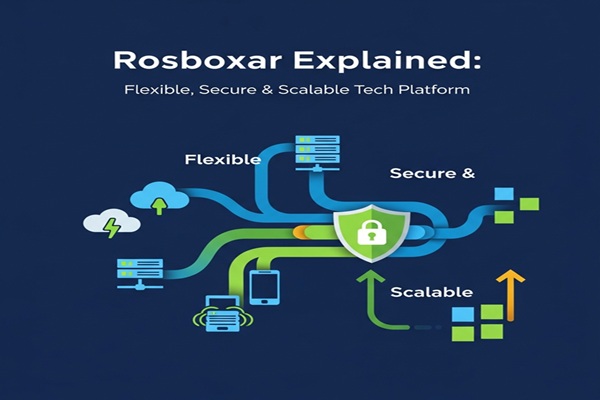
You know that feeling when you stumble across a tech term that sounds mysterious, slightly futuristic, and honestly a bit confusing at first? That’s exactly how I felt when I first heard rosboxar. I remember thinking, “Is this a gadget, a platform, or one of those buzzwords that disappears in six months?” Spoiler alert: it’s way more interesting than that.
If you’ve been curious about rosboxar, what it actually does, and why so many people suddenly talk about it, grab a coffee and settle in. I’ll walk you through everything in plain language, like we’re chatting on a lazy afternoon.
What Exactly Is Rosboxar?
Let’s clear the fog first. Rosboxar is a modular, flexible, and scalable digital technology framework designed to blend automation, intelligence, and adaptability into one ecosystem. It doesn’t behave like a single app or device. Instead, it works like a smart backbone that supports different digital solutions across industries.
I like to think of rosboxar as a build-your-own digital brain. You plug in what you need, remove what you don’t, and scale it up when things grow. Sounds refreshing, right?
Ever wondered why traditional systems feel clunky and slow the moment your business or project grows? Rosboxar exists to fix that exact headache.
Why Rosboxar Exists in the First Place
Technology grows fast. Businesses, creators, and developers struggle to keep systems flexible enough to evolve. I’ve personally seen companies stuck with outdated platforms simply because switching felt painful and expensive.
Rosboxar solves this by design. It focuses on adaptability first, not as an afterthought.
Here’s the big idea behind it:
-
Technology should adjust to you, not force you to adjust to it
-
Systems should scale smoothly without breaking
-
Security and performance should grow together, not fight each other
IMO, this mindset alone puts rosboxar ahead of many traditional frameworks.
The Core Philosophy Behind Rosboxar
Rosboxar doesn’t chase trends for the sake of hype. It builds around three simple but powerful principles.
Flexibility Comes First
Rigid systems fail fast. Rosboxar embraces modular architecture, which means you can add, remove, or upgrade components without tearing everything down.
Security Isn’t Optional
Too many platforms treat security like a bonus feature. Rosboxar treats it like oxygen. Without it, nothing works.
Scalability Without Stress
Whether you run a small startup or a massive enterprise, rosboxar grows with you. No drama. No painful migrations.
Have you ever upgraded a system and thought, “Why does this feel harder than starting from scratch?” Rosboxar aims to eliminate that feeling.
How Rosboxar Actually Works
Let me break this down without the usual tech jargon overload.
At its core, rosboxar uses a modular framework. Each module handles a specific task, like data processing, automation, analytics, or security. These modules talk to each other smoothly, thanks to standardized integration rules.
Think of it like Lego blocks:
-
Each block has a clear purpose
-
You can rearrange blocks anytime
-
You can add new blocks without rebuilding the whole structure
That’s rosboxar in action.
Key Features That Make Rosboxar Stand Out
Here’s where things get exciting. Rosboxar packs features that feel practical, not flashy.
Modular Architecture
This remains rosboxar’s strongest feature. You don’t get locked into one rigid setup.
Key benefits include:
-
Faster updates
-
Easier customization
-
Lower long-term maintenance costs
I’ve worked with rigid platforms before, and trust me, modular systems save both time and sanity.
Advanced Automation Capabilities
Rosboxar doesn’t just automate tasks blindly. It supports intelligent automation, which means it adapts based on data patterns and usage behavior.
That leads to:
-
Smarter workflows
-
Reduced manual effort
-
More consistent results
Ever wished your system could “learn” instead of repeating the same mistakes? Rosboxar moves in that direction.
Enterprise-Grade Security
Security deserves its own spotlight here.
Rosboxar integrates:
-
End-to-end encryption
-
Multi-layer authentication
-
Real-time threat monitoring
Instead of reacting after problems appear, rosboxar focuses on prevention. FYI, that proactive approach saves companies serious money in the long run.
Rosboxar vs Traditional Digital Systems
Let’s be honest. Most legacy systems feel heavy, slow, and stubborn.
Here’s a quick comparison that makes things clearer:
Traditional Systems
-
Fixed architecture
-
Painful upgrades
-
Limited scalability
-
Security updates lag behind
Rosboxar
-
Fully modular design
-
Smooth scaling
-
Faster updates
-
Built-in security layers
Once you experience flexibility, going back feels… painful.
Where Rosboxar Really Shines
Rosboxar doesn’t belong to just one industry. That’s one of its biggest strengths.
Business and Enterprise Use
Businesses use rosboxar to:
-
Automate operations
-
Manage large data flows
-
Improve system reliability
I’ve seen companies cut operational friction simply by switching to modular frameworks like this.
Finance and Auditing
In finance, accuracy and security matter more than speed alone.
Rosboxar supports:
-
Secure data handling
-
Automated compliance checks
-
Real-time reporting
When regulations change (and they always do), rosboxar adapts without chaos.
Manufacturing and Logistics
Manufacturing systems need reliability and flexibility. Rosboxar fits perfectly here.
It helps with:
-
Predictive maintenance
-
Inventory tracking
-
Supply chain optimization
Ever wondered why some factories recover faster from disruptions? Smart frameworks play a huge role.
Creative and Digital Innovation
This part surprised me at first. Rosboxar also supports creative workflows.
Designers and digital teams use it to:
-
Integrate multiple tools seamlessly
-
Manage large creative assets
-
Scale digital experiences smoothly
Technology shouldn’t block creativity, right? Rosboxar respects that.
Also Read : LittleMinaxo Explained: Features, Uses & Why It’s Trending
Scalability Without the Headaches
Scaling usually introduces stress. More users mean more load, more bugs, and more late-night troubleshooting.
Rosboxar handles scaling intelligently by:
-
Distributing workloads efficiently
-
Allowing selective upgrades
-
Preventing system-wide failures
Instead of everything crashing together, rosboxar isolates issues. That alone feels like magic sometimes 🙂
Performance and Reliability
Speed matters, but consistency matters more.
Rosboxar optimizes performance through:
-
Intelligent resource allocation
-
Minimal downtime during updates
-
Real-time monitoring tools
You don’t want surprises at 2 a.m. Rosboxar aims to keep systems boring in the best possible way.
Is Rosboxar Easy to Adopt?
Here’s the honest answer: yes, compared to most enterprise frameworks.
Rosboxar supports:
-
Gradual adoption
-
Integration with existing systems
-
Minimal disruption during transition
You don’t need to rip everything out and start over. That alone makes decision-makers breathe easier.
Challenges and Realistic Expectations
Let’s keep things real. No system is perfect.
Rosboxar may feel:
-
Overkill for very small projects
-
Complex without proper planning
However, those challenges usually disappear once teams understand modular thinking. The learning curve exists, but it pays off.
Ever tried switching from spreadsheets to full systems? Same vibe uncomfortable at first, powerful later.
Why Rosboxar Feels Future-Ready
Technology trends come and go. Rosboxar focuses on structure, not hype.
It aligns well with:
-
Automation growth
-
Distributed systems
-
Security-first design
Instead of chasing trends, rosboxar prepares systems to handle whatever comes next. That’s a smart bet.
My Personal Take on Rosboxar
I’ve seen enough tech promises fall flat to stay skeptical by default. Rosboxar impressed me because it doesn’t pretend to reinvent everything. It improves what already exists by making it flexible and scalable.
That practical mindset matters more than flashy features. And honestly, systems that quietly work well earn my respect.
Would I recommend rosboxar to everyone? Not blindly. But for organizations that value adaptability, security, and long-term growth, it makes serious sense.
Who Should Seriously Consider Rosboxar?
Rosboxar fits best if you:
-
Manage complex systems
-
Expect growth or scaling
-
Need strong security
-
Hate rigid platforms
If you checked more than two boxes, rosboxar deserves your attention.
Conclusion: Is Rosboxar Worth the Buzz?
Let’s wrap this up.
Rosboxar stands out because it prioritizes flexibility, security, and scalability without overcomplicating things. It doesn’t shout for attention. It simply works and works well.
If you care about building systems that survive growth, change, and future demands, rosboxar feels like a smart foundation. And hey, boring stability often beats flashy chaos any day.