

Artificial intelligence is entering a decisive phase in 2026. What began as experimental innovation a decade ago has matured into infrastructure that shapes economies, security strategies, and daily life. Enterprises, governments, and research institutions are no longer asking whether AI should be adopted—they are refining how it should be deployed responsibly and strategically. This year’s trends demonstrate a shift from broad experimentation to targeted, high-impact implementation driven by scalability, regulation, and measurable return on investment.
TLDR: AI in 2026 is defined by multimodal systems, autonomous agents, and domain-specific models that are reshaping industries. Companies are moving from experimentation to integration, prioritizing governance, security, and measurable outcomes. Advances in edge AI, robotics, and synthetic data are expanding real-world applications. Trust, regulation, and infrastructure maturity are now as important as model performance.
1. Multimodal AI Becomes the Standard
In 2026, AI systems no longer process text, images, or audio in isolation. Multimodal AI—models capable of simultaneously interpreting and generating across different data types—has become the norm for enterprise and consumer platforms alike. These systems integrate language, vision, sound, and increasingly sensor data to produce more context-aware outputs.
Practical impacts are substantial:
- Healthcare: AI analyzes patient records, medical imaging, and real-time biometric sensor data in a unified diagnostic process.
- Manufacturing: Vision systems combined with operational logs and audio sensors improve predictive maintenance.
- Customer service: Virtual assistants interpret voice tone, text queries, and screen content simultaneously for richer interactions.

The technical focus has shifted from scaling model size to improving cross-modal reasoning accuracy and reducing hallucination rates. Enterprises are demanding not only intelligence, but consistency and traceability across modalities.
2. The Rise of Autonomous AI Agents
Perhaps the most transformative development in 2026 is the proliferation of autonomous AI agents. Unlike traditional AI assistants that respond reactively, these agents can plan, execute multi-step tasks, access digital tools, and refine strategies based on feedback.
Organizations are deploying agent-based systems for:
- Supply chain optimization
- Automated cybersecurity monitoring
- Financial portfolio rebalancing
- Contract drafting and compliance tracking
Modern AI agents are built with layered safeguards. Permission boundaries, audit logs, and human-in-the-loop checkpoints ensure that autonomy does not compromise oversight. Regulatory frameworks introduced in 2025 and strengthened in 2026 now require documentation of agent decision pathways in sensitive industries such as finance and healthcare.
What distinguishes this trend is its focus on operational autonomy with accountability. Businesses are adopting agents not as experimental tools, but as reliable digital workforce extensions.
3. Domain-Specific Foundation Models
The era of one-size-fits-all foundation models is giving way to highly specialized AI systems. Industry-trained models fine-tuned on proprietary or regulated datasets are outperforming general-purpose systems in accuracy and compliance.
Examples include:
- Legal models trained exclusively on jurisdiction-specific case law
- Medical AI certified on peer-reviewed clinical datasets
- Energy sector models optimized for grid forecasting and load balancing
This specialization reduces risk and enhances explainability. Enterprises are increasingly building hybrid infrastructures: a general foundation model for basic language tasks, supplemented by specialized models for mission-critical decisions.
The underlying trend reflects maturity. Businesses understand that accuracy in context is more valuable than broad conversational fluency.
4. Edge AI and On-Device Intelligence
Data privacy regulations and latency requirements are accelerating adoption of edge AI solutions. Instead of sending data to centralized cloud servers, models now process information directly on local devices—smartphones, industrial sensors, vehicles, and medical wearables.
Image not found in postmetaThis shift offers several strategic advantages:
- Reduced latency: Critical decisions occur in milliseconds.
- Enhanced privacy: Sensitive data remains local.
- Lower bandwidth costs: Less reliance on continuous cloud transmission.
In autonomous vehicle networks and industrial robotics, on-device intelligence is essential. By 2026, chip manufacturers have produced AI accelerators optimized for low-energy inference, making powerful models viable even in compact devices.
5. AI Governance and Regulatory Compliance
As AI systems become pervasive, governance has moved from theoretical discussion to operational requirement. Governments across North America, Europe, and parts of Asia have implemented updated AI compliance frameworks focusing on transparency, bias mitigation, and risk categorization.
Core governance components in 2026 include:
- Mandatory algorithmic risk assessments
- AI audit trails for enterprise systems
- Bias and explainability reporting
- Clear labeling of AI-generated content
Organizations that fail to comply face significant financial penalties and reputational damage. Consequently, AI ethics teams and compliance officers are now standard in large enterprises.
Importantly, regulation is not stifling innovation. Instead, it is creating clearer rules that enable responsible scaling. Trust is emerging as a competitive differentiator.
6. Robotics and Physical AI Acceleration
The combination of improved multimodal AI and affordable sensors has dramatically enhanced robotics capabilities. In 2026, “physical AI” systems operate in warehouses, hospitals, agriculture, and construction sites with higher reliability than ever before.
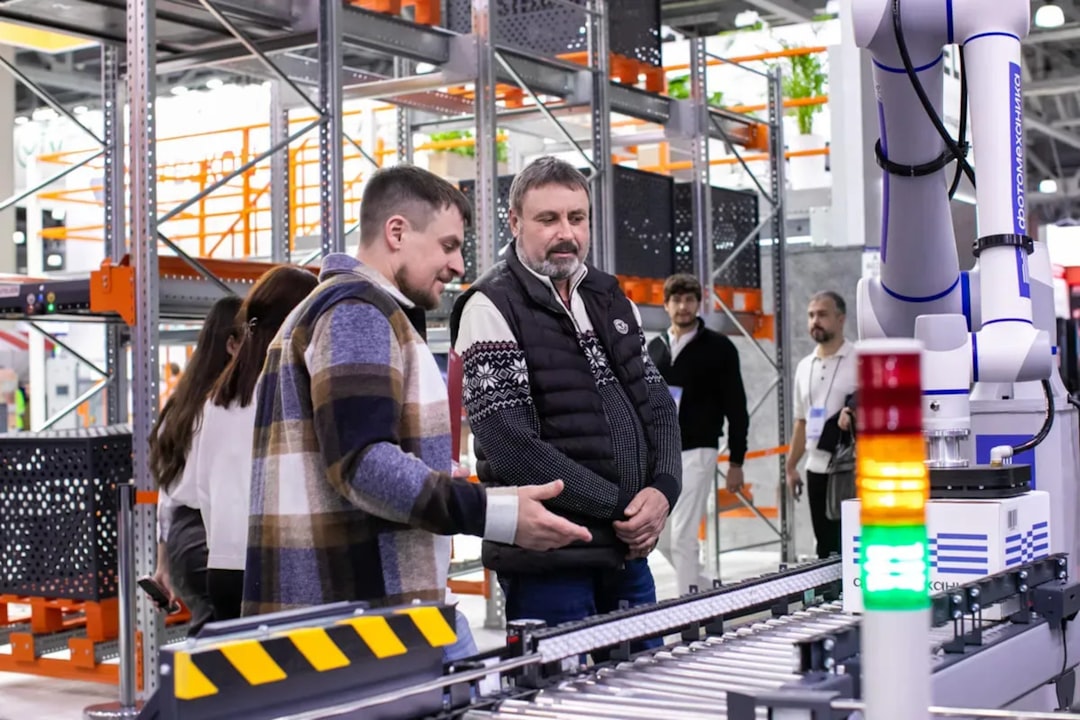
Advancements include:
- Better real-time spatial reasoning
- Improved human-robot collaboration safety systems
- Adaptive grasping and manipulation techniques
Humanoid robots remain limited to specialized industrial or research settings, but task-specific robots are scaling quickly. Logistics centers now rely extensively on AI-coordinated robotic fleets that dynamically adjust to shipment flows.
This convergence of software intelligence and hardware refinement marks a pivotal shift: AI is no longer confined to screens—it is embedded in physical workflows.
7. Synthetic Data and Advanced Simulation
Data scarcity and privacy restrictions have accelerated the use of synthetic data generation. Organizations train models using artificially created yet statistically accurate datasets, reducing dependency on sensitive or hard-to-obtain real-world data.
Applications include:
- Autonomous vehicle training in simulated environments
- Fraud detection systems modeled on synthetic financial patterns
- Medical research using anonymized disease progression simulations
Simulation environments in 2026 are photorealistic and physics-accurate, enabling safer testing of high-risk AI systems. Synthetic data does not replace real data entirely, but it complements and accelerates development cycles.
8. Energy Efficiency and Sustainable AI
The environmental cost of large-scale AI training has prompted industry-wide efficiency reforms. In 2026, sustainability metrics are integrated into AI procurement decisions. Companies evaluate models not only by accuracy but also by energy consumption per inference.
Key developments include:
- Low-power AI hardware accelerators
- Model compression and pruning techniques
- Server infrastructure optimized for renewable energy integration
Cloud providers now publish carbon intensity dashboards for AI workloads. Investors and regulators increasingly scrutinize the ecological footprint of AI expansion.
9. Human-AI Collaboration as a Strategic Model
Despite fears of automation replacing human roles, 2026 highlights collaboration rather than substitution. The most successful deployments integrate AI into workflows that amplify human judgment.
Examples include:
- Doctors validating AI diagnostic suggestions
- Journalists using AI for research but verifying outputs independently
- Engineers leveraging generative design tools while retaining final authority
Training programs now focus on AI literacy, ensuring professionals understand system limitations alongside capabilities. Organizations prioritize explainable interfaces that allow users to interrogate AI outputs rather than accept them passively.
10. Cybersecurity in the Age of AI
AI is transforming both offensive and defensive cybersecurity. Threat actors employ AI for automated phishing generation and vulnerability scanning. In response, enterprises deploy AI-powered anomaly detection systems capable of identifying subtle behavioral deviations in real time.
Zero-trust architectures combined with AI-driven risk scoring are becoming standard. Models monitor access requests, network behavior, and transaction patterns continuously.
The cybersecurity arms race underscores a central theme of 2026: AI is a force multiplier on both sides of technological competition, making strategic governance indispensable.
Conclusion
The AI landscape in 2026 reflects a transition from rapid experimentation to disciplined execution. Multimodal systems, autonomous agents, edge computing, robotics, and synthetic data are reshaping industry operations. Meanwhile, governance, sustainability, and transparency have emerged as non-negotiable pillars of long-term viability.
Organizations that succeed in this environment are those that understand AI not merely as a technology upgrade, but as a structural transformation. The emphasis is no longer on being the first to adopt AI, but on deploying it responsibly, efficiently, and strategically at scale. As infrastructure matures and regulatory clarity increases, artificial intelligence in 2026 stands as a foundational capability shaping the global economy for the decade ahead.