
Let me guess you’ve seen the name Emarand pop up in a few places, Googled it out of curiosity, and thought, “Okay, but what am I actually looking at here?” Yeah, same. The first time I stumbled across Emarand, I expected a clear-cut definition, maybe a neat little box explaining everything. Spoiler alert: that box doesn’t exist.
Instead, Emarand feels more like a concept with personality than a rigid system. And honestly? That’s part of the charm. If you like ideas that sit somewhere between branding, strategy, innovation, and “wait, that’s actually clever,” you’re in the right place.
So grab a coffee, get comfy, and let’s talk about Emarand like two curious people comparing notes rather than reading a textbook.
What Emarand Actually Stands For (No Buzzword Bingo)
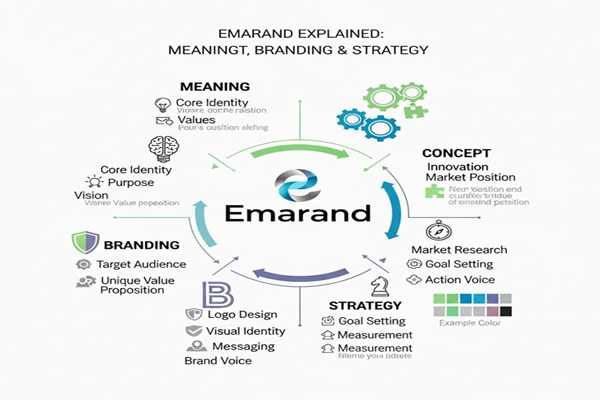
At its core, Emarand works as a coined term, not a dictionary word. Nobody uses it in Scrabble, and no professor quizzes students on it. People use Emarand as a brand-driven idea, often tied to innovation, adaptability, and strategic thinking.
Think of Emarand as:
-
a name built for distinction
-
a conceptual identity, not a formal framework
-
a flexible label for forward-thinking approaches
IMO, that flexibility makes it more interesting than yet another boxed methodology with ten steps and a trademark symbol.
Why Emarand Feels Different from Typical “Business Concepts”
You know how some business ideas feel painfully stiff? Charts everywhere, jargon overload, zero personality. Emarand dodges that vibe completely.
Emarand doesn’t lock itself into rigid rules
Instead of saying “do X, then Y, then Z,” Emarand encourages:
-
adaptation over repetition
-
context-aware thinking
-
creative problem-solving
Ever noticed how the best ideas rarely follow a perfect template anyway? Exactly.
Emarand leans into modern branding logic
Brand identity matters more than ever, and Emarand plays that game well by:
-
sounding unique
-
avoiding overused terminology
-
creating instant differentiation
FYI, uniqueness alone gives Emarand serious SEO and branding leverage. More on that later
The Branding Power Behind the Name “Emarand”
Let’s talk about the name itself, because names matter. A lot.
Why coined names win in digital spaces
When you invent a word like Emarand, you:
-
avoid keyword saturation
-
own the search narrative
-
build meaning instead of inheriting baggage
Compare that to terms like “innovation consulting.” Good luck ranking for that without a seven-figure budget.
Emarand as a digital identity
People use Emarand across blogs and platforms to signal:
-
originality
-
forward momentum
-
conceptual clarity without rigidity
I like that it feels intentional but not pretentious. That balance stays rare.
Emarand as a Philosophy, Not a Formula
Here’s where Emarand really clicks for me. It doesn’t pretend to solve everything.
Emarand encourages thinking, not following
Instead of handing you answers, Emarand nudges you to ask:
-
What actually works here?
-
What needs to change?
-
What assumptions should we drop?
Ever wondered why some strategies age like milk while others stay relevant? Emarand bets on adaptability.
A mindset built for uncertainty
Markets shift. Technology evolves. Attention spans evaporate. Emarand fits this chaos by promoting:
-
flexibility
-
iteration
-
learning in motion
No crystal balls. Just smart movement.
Where People Commonly Apply Emarand
You’ll notice Emarand shows up in a few recurring contexts. That’s not random.
Business strategy & consulting
Emarand often frames:
-
growth thinking
-
restructuring ideas
-
hybrid service models
People use it when traditional consulting language feels… tired.
Digital branding & content ecosystems
Content creators and marketers lean on Emarand for:
-
conceptual storytelling
-
brand positioning
-
niche authority building
I’ve seen it work especially well when someone wants to own a topic instead of chasing trends.
Innovation-driven projects
When teams experiment, Emarand provides:
-
conceptual breathing room
-
a shared language without constraints
-
creative alignment without dogma
That last part matters more than people admit.
Emarand vs Traditional Frameworks (Quick Reality Check)
Let’s be honest. Emarand doesn’t compete with Lean, Agile, or Six Sigma. It doesn’t even try.
Key differences that actually matter
Here’s a clean comparison:
-
Traditional frameworks
-
fixed steps
-
formal certification
-
standardized outputs
-
-
Emarand
-
adaptive thinking
-
brand-driven meaning
-
contextual application
-
Which one wins? Depends on what you need. Structure helps when chaos overwhelms. Emarand helps when structure suffocates.
Also Read : Wattip: What It Is, How It Works & Why It Matters
Why Emarand Works So Well for SEO (Yes, Really)
Now for the nerdy part but I’ll keep it painless.
Low competition, high intent
Because Emarand stays unique:
-
search competition stays low
-
relevance stays high
-
topical authority builds faster
That combo feels like SEO gold, and it doesn’t require black magic.
Semantic flexibility
Writers naturally connect Emarand to:
-
innovation
-
branding
-
strategy
-
adaptability
Search engines love that contextual richness. Humans do too.
The Human Appeal of Emarand
Here’s something people rarely say out loud: ideas need personality. Emarand has one.
It feels human, not manufactured
Emarand:
-
avoids robotic phrasing
-
encourages interpretation
-
evolves with use
I trust concepts more when they allow disagreement. Emarand does that quietly.
It invites ownership
Instead of telling people what to think, Emarand lets users:
-
define it through action
-
shape it through context
-
grow it through experience
That sense of ownership builds loyalty faster than any manifesto.
Common Misunderstandings About Emarand
Let’s clear a few things up before assumptions spiral.
Emarand is NOT a place
Some articles describe Emarand like a city or hub. That’s creative writing, not geography.
Emarand is NOT a formal system
No certifications. No official handbook. No secret committee (sadly).
Emarand IS a flexible concept
And that flexibility explains why people interpret it differently. That’s a feature, not a flaw.
How I’d Personally Use Emarand (Real Talk)
If I ran a project tomorrow, I’d use Emarand as:
-
a narrative anchor
-
a strategic umbrella
-
a branding signal
I wouldn’t force it into slides with bullet-point commandments. I’d let it guide conversations and decisions organically. Less “process police,” more “shared understanding.”
Ever noticed how the best strategies feel obvious after they work? Emarand lives in that space.
The Future Potential of Emarand
Here’s where things get interesting.
Emarand can evolve without breaking
Because it lacks rigid definitions, Emarand can:
-
absorb new ideas
-
adapt to industries
-
remain relevant longer
That adaptability gives it long-term branding value.
Growth without dilution
As long as users:
-
stay intentional
-
avoid buzzword stuffing
-
prioritize clarity
Emarand can grow without becoming meaningless. That balance takes effort, but it’s doable.
Final Thoughts: Why Emarand Sticks With You
So here we are. After all this, Emarand still resists a one-line definition and that’s exactly why it works.
Emarand represents adaptability, originality, and forward-thinking wrapped in a brand-first identity. It avoids rigid frameworks, embraces interpretation, and rewards thoughtful use.
If you like concepts that grow with you instead of boxing you in, Emarand deserves your attention. Maybe even your imagination.