
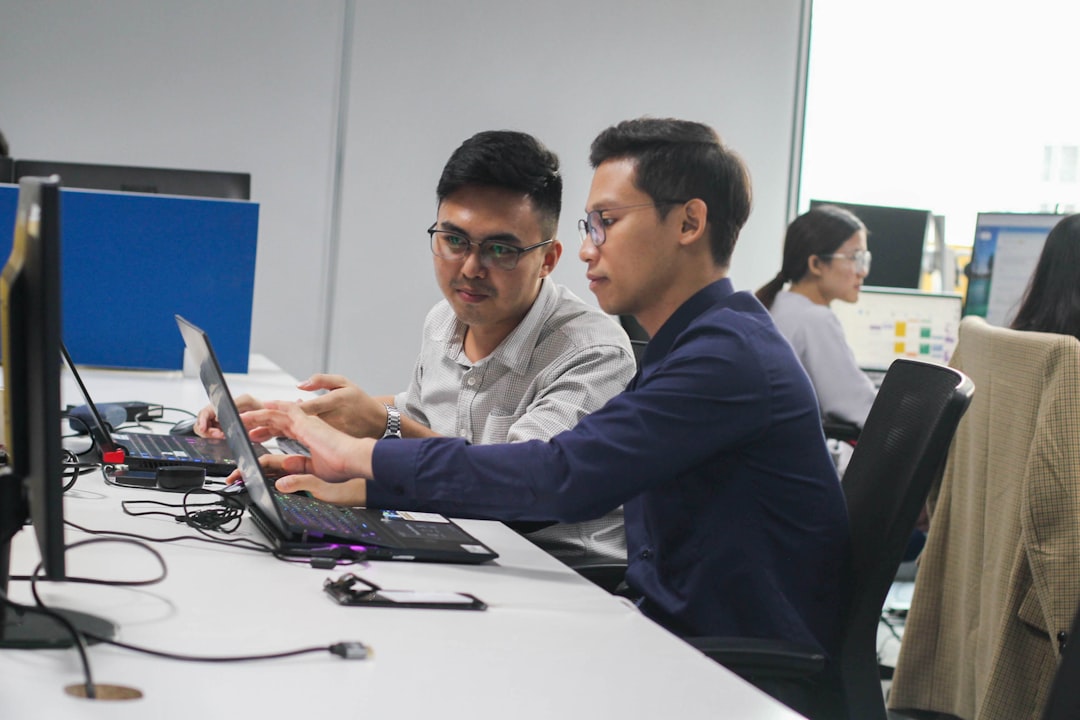
Across Asia, a new vocabulary is emerging to describe people whose lives are shaped less by a single passport, language, or hometown than by constant movement through digital platforms, regional pop culture, cross-border work, and shared urban experiences. One term increasingly used in informal discussions is “Asiaks”: a shorthand for a hyperconnected Asian identity that is networked, mobile, multilingual, and culturally hybrid. While the word is still new and not yet a settled academic category, it points to a real social shift: many Asians are beginning to understand themselves not only through nation, ethnicity, or religion, but also through participation in a dense regional web of media, markets, migration, and technology.
TLDR: Asiaks refers to an emerging identity among hyperconnected Asians whose sense of belonging is shaped by digital life, regional culture, mobility, and shared economic realities. It does not replace national, ethnic, or local identities; rather, it sits alongside them as a flexible layer of self-understanding. The rise of Asiaks reflects a more interconnected Asia, but it also raises serious questions about inequality, cultural flattening, surveillance, and who gets included in this new identity.
Understanding the Term “Asiaks”
The term Asiaks can be understood as a cultural and social label for people in Asia, and in Asian diasporas, whose identities are formed through constant connection across borders. It captures the experience of someone who may live in Manila, study online with classmates in Seoul, follow Indian financial influencers, use Chinese e-commerce platforms, watch Japanese animation, work for a Singapore-based company, and communicate daily in a mixture of English, local languages, emojis, memes, and platform-specific slang.
This is not simply a matter of being “Asian.” Asia has always been vast, diverse, and internally connected through trade, religion, empire, migration, and intellectual exchange. What is different today is the speed, scale, and intimacy of connection. Hyperconnectivity means that cultural references, business trends, political debates, and personal relationships can move across borders instantly. For many younger people especially, the region is no longer an abstract map. It is a daily feed.
Still, “Asiaks” should be used carefully. It is not a formal ethnic identity, and it should not be treated as if it describes all Asians. Asia contains enormous inequalities and differences: rural and urban, rich and poor, connected and disconnected, majority and minority, citizen and migrant. The term is most useful when it helps us examine a specific phenomenon: the rise of a cross-border, digitally mediated Asian self-consciousness.
Why This Identity Is Emerging Now
Several forces are contributing to the emergence of Asiaks as a recognizable identity pattern.
- Digital platforms: Social media, messaging apps, e-commerce, online gaming, streaming services, and remote work tools have made regional interaction routine.
- Urbanization: Asia’s megacities are becoming laboratories of hybrid identity, where migrants, professionals, students, and entrepreneurs constantly encounter new cultural influences.
- Regional popular culture: Korean dramas, Japanese anime, Thai dramas, Indian cinema, Indonesian music, Chinese web novels, and Filipino internet culture circulate widely across borders.
- Economic integration: Supply chains, startup ecosystems, digital finance, tourism, and education have created shared professional and consumer experiences.
- Diaspora networks: Asian communities abroad often connect back to multiple parts of Asia at once, building broader regional awareness beyond one homeland.
These forces do not erase older identities. A person can remain deeply Vietnamese, Tamil, Kazakh, Malay, Tibetan, Korean, or Arab Asian while also participating in a broader Asiak mode of cultural connection. The important point is that identity is becoming more layered. People may feel attached to neighborhood, city, nation, religion, region, profession, fandom, and online community simultaneously.
Hyperconnectivity as a Cultural Environment
To understand Asiaks, it is essential to see hyperconnectivity not only as a technical condition, but as a cultural environment. The smartphone is not merely a device; it is a gateway to belonging, comparison, aspiration, and performance. People learn how to dress, speak, work, date, protest, invest, travel, and imagine success through interconnected media systems.
In this environment, identity is often assembled through fragments. A young professional in Jakarta may adopt productivity habits from a Singaporean business podcast, skincare routines from Korean creators, financial advice from Indian YouTubers, and political language from global human rights discourse. None of these influences fully defines the person, but together they shape a recognizable style of being: adaptive, cosmopolitan, platform-aware, and regionally literate.
This is one reason Asiaks should not be reduced to fashion or youth slang. The identity reflects deeper structural changes. It is connected to how people seek work, build trust, form communities, and interpret modernity. In a region where economic development has been rapid but uneven, hyperconnected people often compare their lives not only with neighbors but with peers across the continent. That can create ambition and solidarity, but also anxiety and a sense of permanent competition.
The Language of a Networked Generation
Language is central to the Asiak experience. English often functions as a bridge language, especially in business, higher education, technology, and online spaces. However, the emerging identity is not simply English-speaking or Westernized. It is more complex. Many Asiaks move between several languages and registers: a national language at school, a heritage language at home, English at work, regional slang online, and visual communication through memes, stickers, and short videos.
This linguistic flexibility can be empowering. It allows people to participate in multiple communities and access diverse sources of knowledge. It also challenges older assumptions that identity must be pure or singular. A person who speaks mixed languages is not necessarily confused; they may be expressing the reality of a mixed social world.
At the same time, language can expose inequality. Those with strong English skills, high-speed internet, and access to elite education may find it easier to join regional and global conversations. Others may be excluded or misrepresented. If Asiaks becomes associated only with educated urban populations, it risks becoming a narrow label for the digitally privileged rather than a meaningful description of wider Asian transformation.
Popular Culture and Shared Emotional Worlds
One of the strongest foundations of Asiak identity is popular culture. Entertainment has created shared emotional worlds across borders. Millions of people in different countries may cry over the same drama characters, quote the same anime scenes, follow the same idols, or debate the same film endings. These shared references create a sense of familiarity among strangers.

Popular culture also helps Asians see one another outside official narratives. For decades, many countries in Asia learned about neighbors mainly through history textbooks, state media, or geopolitical tension. Today, cultural circulation offers more intimate images: family life, humor, food, school pressure, romance, workplace stress, and generational conflict. These representations are not always accurate, but they can humanize societies that were once distant.
However, cultural exchange is not automatically equal. Major media industries have more power to define what “Asian culture” looks like. Smaller communities may be consumed as aesthetic material without receiving recognition or economic benefit. A serious understanding of Asiaks must therefore ask: whose culture travels, who profits from it, and who is expected to remain invisible?
Work, Mobility, and the Regional Professional Class
Another important dimension of Asiaks is economic. Asia’s professional class is increasingly regional. Engineers, designers, nurses, teachers, researchers, logistics workers, seafarers, creators, and entrepreneurs often build careers across borders, even when they remain physically in one country. Remote work and digital platforms have expanded these possibilities.
For some, this creates new freedom. A freelancer in Ho Chi Minh City can serve clients in Tokyo or Dubai. A startup founder in Bengaluru can partner with manufacturers in Shenzhen and investors in Singapore. A student in Dhaka can take online courses from universities across the world. These connections produce a practical sense of Asia as an operating system rather than merely a geographic region.
But mobility is uneven. Highly skilled professionals may experience hyperconnectivity as opportunity, while migrant laborers may experience it as monitoring, debt, and separation from family. Delivery riders, domestic workers, factory employees, and platform laborers are also part of connected Asia, but their stories are often excluded from glamorous narratives of innovation. Any responsible discussion of Asiaks must include both the aspirational and the precarious sides of connectivity.
Politics, Belonging, and the Limits of a Regional Identity
Can Asiaks become a political identity? Perhaps, but only in limited and cautious ways. Shared digital spaces can foster regional awareness around issues such as climate change, labor rights, gender equality, public health, and disaster response. Young Asians increasingly observe one another’s political struggles and borrow tactics, slogans, and forms of mutual aid.
Yet Asia is not a single political community. It includes democracies, monarchies, one-party states, military regimes, disputed territories, and fragile post-conflict societies. Historical grievances remain powerful. Nationalism is not disappearing; in some places, it is intensifying. A regional digital identity may encourage empathy, but it cannot easily overcome borders, censorship, legal systems, or security conflicts.
This is why Asiaks should be understood less as a replacement for citizenship and more as a field of informal solidarity. It can help people recognize common pressures: climate vulnerability, housing costs, exam competition, family obligations, workplace burnout, migration, and the search for dignity in fast-changing economies. But it should not pretend that all Asians share the same risks or responsibilities.
The Risks of Flattening Asia
The most serious criticism of the Asiaks concept is that it may flatten Asia’s diversity. Asia is home to thousands of languages, religions, ethnic groups, and historical experiences. A fashionable regional identity could easily become dominated by wealthy cities, major languages, and exportable consumer culture. If that happens, Asiaks would not deepen understanding; it would produce another stereotype.
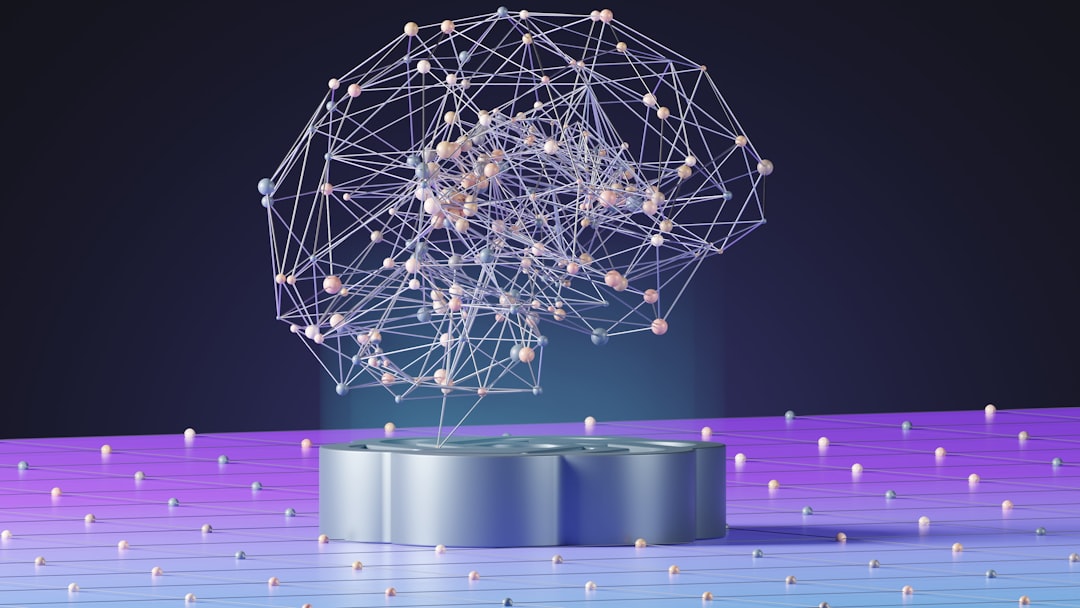
There is also the risk of algorithmic simplification. Platforms reward content that is fast, emotional, and easily categorized. Complex cultures become trends. Sacred practices become visuals. Political struggles become hashtags. The algorithm may create a feeling of connection while reducing real people to consumable fragments.
A more trustworthy version of Asiaks must resist this flattening. It should encourage curiosity rather than generalization. It should treat Asia as plural, contested, and historically deep. The identity is most valuable when it helps people ask better questions: What do we share? Where do we differ? Who has power? Who is missing from the conversation?
What Asiaks May Mean for the Future
Looking ahead, the Asiaks identity may become more visible as Asia’s digital, economic, and cultural systems continue to integrate. It may influence branding, education, entertainment, tourism, workplace culture, and civic activism. Universities may teach more regional histories. Companies may design for multilingual Asian consumers. Creators may collaborate across borders with greater ease. Young people may increasingly see neighboring countries not as distant others, but as part of their everyday imagination.
At its best, Asiaks can support a more confident and connected Asia: one that does not depend entirely on Western validation, one that recognizes internal diversity, and one that learns from its own cities, villages, coastlines, traditions, and technologies. It can help people build identities that are open without being rootless, modern without being culturally empty, and regional without being imperial.
At its worst, it could become a shallow lifestyle label for the urban middle class, detached from history and inequality. Whether the term becomes meaningful depends on how it is used. If it is used to market sameness, it will fail. If it is used to examine connection with seriousness, humility, and attention to power, it may become a useful lens for understanding twenty-first-century Asia.
Conclusion
Asiaks is not a finished identity. It is a signpost pointing toward a changing reality: Asia is being experienced through networks as much as through borders. The people shaped by these networks are not abandoning older loyalties, but they are adding new layers of belonging, comparison, and imagination.
To unpack Asiaks is to recognize both promise and tension. Hyperconnected Asia can create empathy, creativity, opportunity, and regional awareness. It can also reproduce inequality, surveillance, cultural appropriation, and exclusion. A serious understanding of this emerging identity must therefore remain balanced: open to new forms of belonging, but alert to the social conditions that make belonging unequal.
In the end, the value of the term lies not in whether it becomes popular, but in whether it helps describe a genuine transformation. Across Asia, millions of people are already living in overlapping worlds: local and regional, physical and digital, traditional and experimental. Asiaks gives us one way to name that evolving condition, and to ask what kind of connected Asia is now being built.