
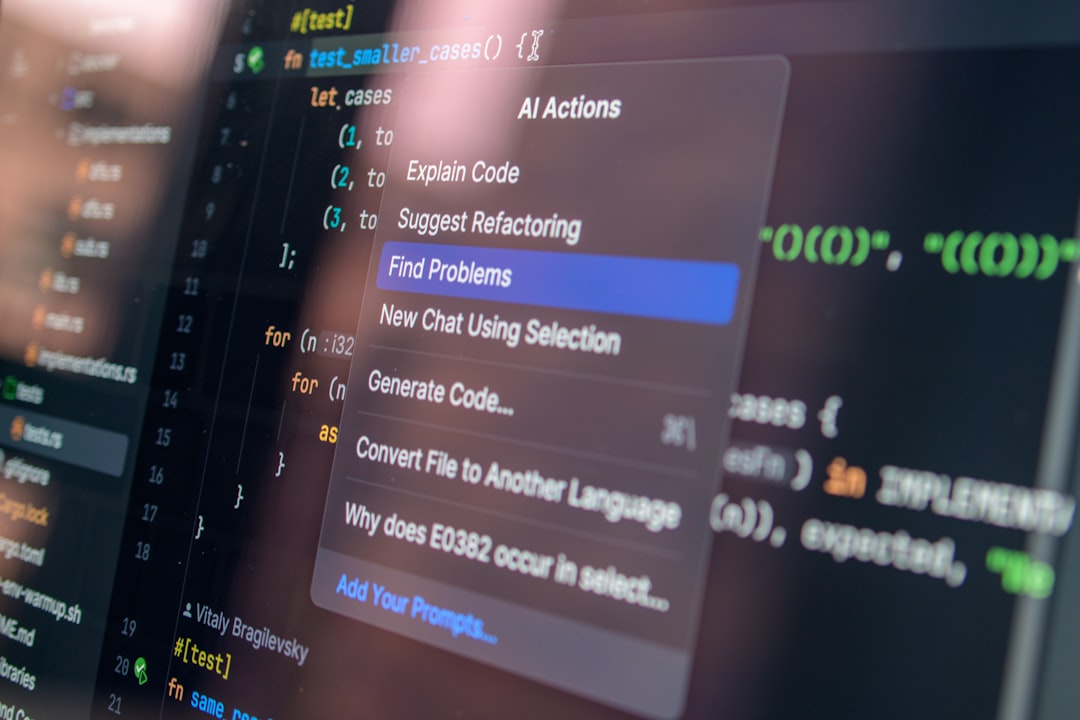
Modern software systems often span millions of lines of code, dozens (or hundreds) of repositories, and contributions from teams distributed across the globe. Navigating such large codebases without the right tooling can feel like wandering through a maze without a map. Codebase indexing platforms like OpenGrok exist to solve exactly this problem: they transform sprawling code repositories into searchable, cross-referenced, and highly navigable knowledge systems.
TLDR: Codebase indexing platforms such as OpenGrok analyze source code and build powerful search and cross-reference indexes that make navigating large projects fast and intuitive. They enable developers to find definitions, references, call hierarchies, and documentation in seconds. This dramatically improves productivity, onboarding speed, and code understanding. For large or legacy systems, these tools are often indispensable.
As projects scale, understanding the relationships between files, classes, functions, and modules becomes increasingly complex. Traditional file explorers and basic text searches are no longer sufficient. Code indexing platforms step in to create a structured representation of the entire codebase, unlocking deep navigability and insight.
What Is a Codebase Indexing Platform?
A codebase indexing platform is a system that scans source code repositories and builds a searchable index of symbols, definitions, references, and metadata. Instead of merely searching raw text, these tools understand programming language constructs and relationships.
Platforms like OpenGrok parse your code and generate:
- Symbol indexes (classes, methods, variables, constants)
- Cross-references between definitions and usages
- Full-text search capabilities
- Revision and history integration
- Structured navigation views
This means that when you click on a function name, you can immediately see:
- Where it is defined
- Where it is used
- Who last modified it
- What related symbols reference it
The difference between traditional search and indexed navigation is the difference between flipping through pages manually and using a detailed index at the back of a book.
Understanding OpenGrok
OpenGrok is one of the most well-known open source code indexing systems. Originally developed by Sun Microsystems, it has evolved into a widely used platform for browsing and searching massive source trees.
At its core, OpenGrok:
- Scans repositories (Git, SVN, Mercurial, and more)
- Parses multiple programming languages
- Builds cross-reference databases
- Serves a web-based UI for interactive code browsing
It supports a wide range of languages including Java, C, C++, JavaScript, Python, and many others. This makes it particularly useful in polyglot environments where multiple languages coexist.
Why Large Codebases Demand Indexing
In small projects, developers can “keep the system in their heads.” In enterprise-scale systems, that is impossible. Without a proper indexing system, teams face several challenges:
- Slow onboarding: New engineers struggle to understand architecture.
- Fear of refactoring: Developers hesitate to modify code due to unknown dependencies.
- Duplicate functionality: Existing utilities go unnoticed and get reimplemented.
- Hidden coupling: Dependencies remain unclear until something breaks.
Code indexing platforms directly address these issues by providing clear visibility into structural relationships. Searching for a symbol returns not just raw text matches, but actual semantic references.
Key Features That Make OpenGrok Powerful
1. Cross-Referenced Navigation
Cross-referencing is arguably the most powerful feature. Clicking a function name instantly reveals all its callers and usages. This capability allows developers to:
- Perform safe refactoring
- Trace execution paths
- Identify unused code
- Understand architectural dependencies
Instead of manually grepping for references, the tool provides structured, reliable results.
2. Incremental Indexing
Large systems change daily. Re-indexing millions of lines of code from scratch would be inefficient. OpenGrok supports incremental indexing, meaning:
- Only changed files are reprocessed
- Indexes stay up-to-date automatically
- Performance remains manageable even in huge repositories
3. Advanced Search Queries
OpenGrok combines full-text search with structural search capabilities. This allows for:
- Regular expression searches
- Field-based queries
- Filtering by file type or path
- Historical revision searches
Developers can move beyond simple keyword discovery and instead ask precise “structural questions” of the codebase.
4. Integration with Version Control
Modern development lives inside version control. OpenGrok integrates with repositories to provide:
- Blame annotations
- Revision history
- Change diffs
- Author tracking
This means that understanding why something changed becomes as easy as seeing what changed.
The Developer Experience
Imagine being asked to modify a core component in a 10-year-old enterprise system written by dozens of teams. Without indexing tools, you might:
- Run multiple grep commands
- Jump between IDEs and repositories
- Search internal documentation repeatedly
With an indexing platform, the workflow becomes streamlined:
- Search for the component name
- View its definition
- Click to see all references
- Follow related class hierarchies
- Review commit history
This radical reduction in friction accelerates both comprehension and confidence.

Comparison With IDE-Based Navigation
Modern IDEs like IntelliJ or VS Code offer internal indexing. However, repository-wide indexing platforms serve a different purpose.
IDE indexing:
- Usually local to a developer’s machine
- Focused on currently opened projects
- Limited by local resources
Centralized indexing platforms:
- Accessible via web browser
- Unified view of multiple repositories
- Shared knowledge base for entire organization
- Independent of developer setup
A centralized platform ensures that everyone works from the same indexed view, which is particularly important for distributed or remote teams.
Use Cases in Enterprise Environments
Large enterprises benefit enormously from tools like OpenGrok. Common scenarios include:
Legacy System Maintenance
When working with legacy code, documentation is often incomplete or outdated. Indexed cross-referencing becomes the primary method of understanding system behavior.
Security Auditing
Security teams can trace the usage of sensitive functions, APIs, or libraries. For example:
- Finding all calls to encryption functions
- Locating unsafe input handling patterns
- Tracking dependency chains
Architecture Reviews
Architects can examine real coupling patterns and verify whether the code reflects intended design principles.
Onboarding Acceleration
New hires can independently explore code instead of constantly asking senior engineers where functions are defined or how components interact.
Challenges and Considerations
While powerful, implementing an indexing system comes with considerations:
- Infrastructure requirements: Large indexes require storage and memory resources.
- Initial indexing time: First-time builds for massive systems may take hours.
- Language support limitations: Not all language features may be perfectly parsed.
- Configuration complexity: Careful setup is necessary for multi-repository environments.
Despite these challenges, most organizations find that the productivity gains far outweigh operational overhead.
The Broader Ecosystem of Code Indexing Tools
Although OpenGrok is a prominent example, it is part of a broader ecosystem. Other tools and platforms offer similar capabilities, sometimes with additional features such as:
- Cloud-native hosting
- AI-assisted search
- Code intelligence integration
- Security scanning overlays
This reflects a broader trend: codebases are no longer just collections of files—they are searchable knowledge systems.
Best Practices for Implementing Code Indexing
If you are considering deploying a code indexing platform, the following best practices can maximize its effectiveness:
- Index all active repositories to avoid fragmented visibility.
- Schedule frequent incremental updates to maintain accuracy.
- Educate developers on advanced search and cross-reference features.
- Integrate with access controls for security compliance.
- Monitor performance metrics to optimize storage and indexing parameters.
Adoption is just as important as deployment. A powerful indexing system provides little value if teams do not actively use it.
The Future of Code Navigation
As software systems grow in complexity, code indexing platforms are evolving to incorporate AI-driven insights. Imagine combining traditional cross-referencing with:
- Automatic architectural summarization
- Dependency risk scoring
- Refactoring suggestions
- Natural language querying
Instead of asking, “Where is this function defined?” developers might ask, “Where does user authentication originate and how does it propagate through the system?” and receive a visual, structured answer.
This progression transforms codebase indexing from a passive browsing tool into an active intelligence layer over software systems.
Conclusion
Codebase indexing platforms like OpenGrok are essential tools for navigating modern software complexity. By building structured indexes, cross-references, and powerful search capabilities, they convert vast code repositories into accessible, explorable knowledge systems.
For organizations maintaining large or long-lived codebases, these platforms reduce risk, enhance collaboration, and dramatically improve developer productivity. Whether maintaining legacy systems, onboarding new engineers, or conducting architectural analysis, indexed code navigation turns confusion into clarity.
In an era where software grows faster than ever, the ability to intelligently navigate and understand code is not a luxury—it is a necessity. Tools like OpenGrok ensure that even the largest codebases remain comprehensible, searchable, and manageable.